
Tokyo’s Unfamiliar Surface╱Issei Suda
Tokyo’s Unfamiliar Surface╱Issei Suda
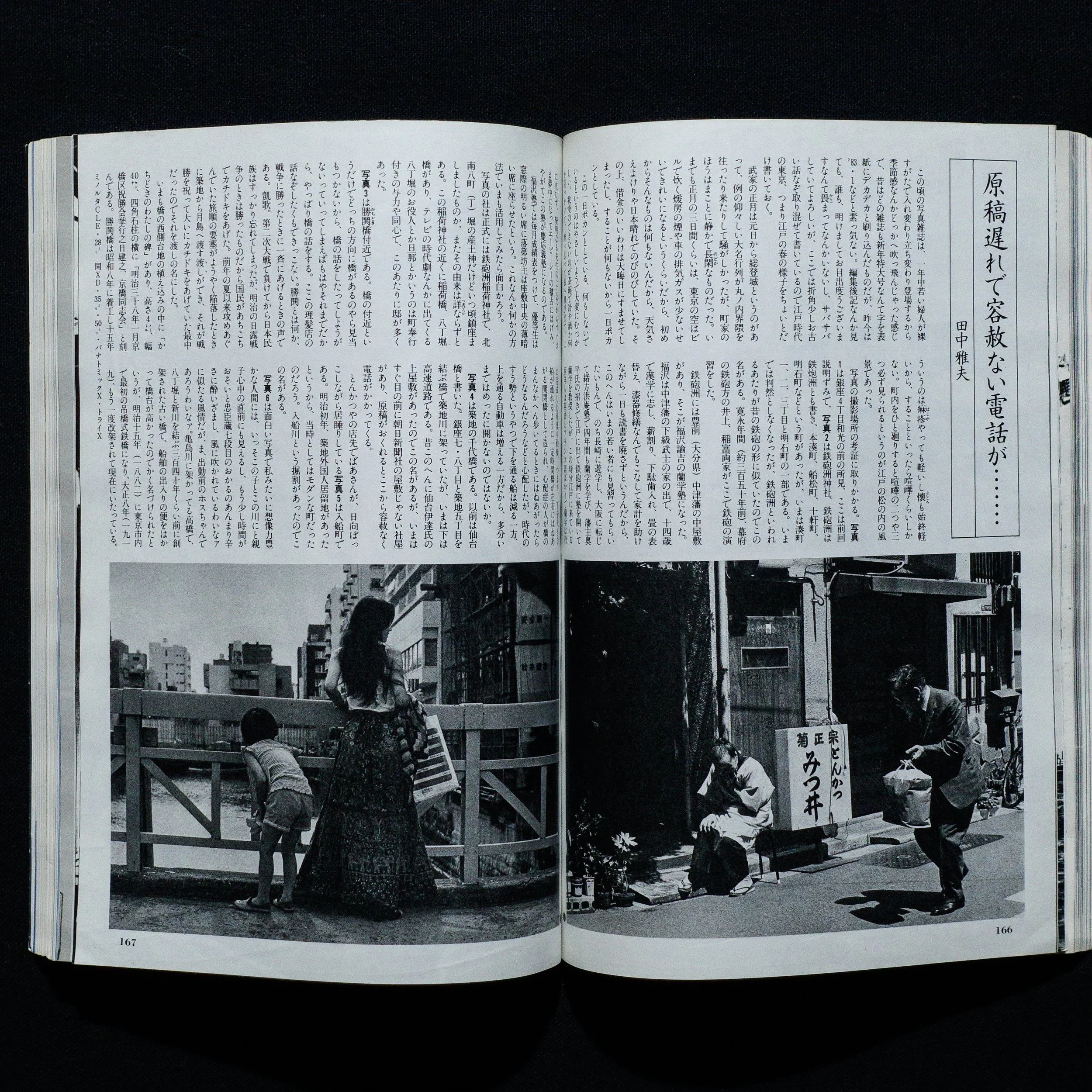
In Tokyo Modern Pictorial, Issei Suda returned to the city he knew most intimately. Suda was born in Kanda, and Tokyo remained one of his central photographic subjects. His attention often settled on surfaces easily overlooked in the street: clothing, walls, signs, bridge railings, the edges of buildings, and bodies or gestures that briefly entered his field of view.
“Kyobashi (2),” published in 1983, makes this way of seeing especially clear.
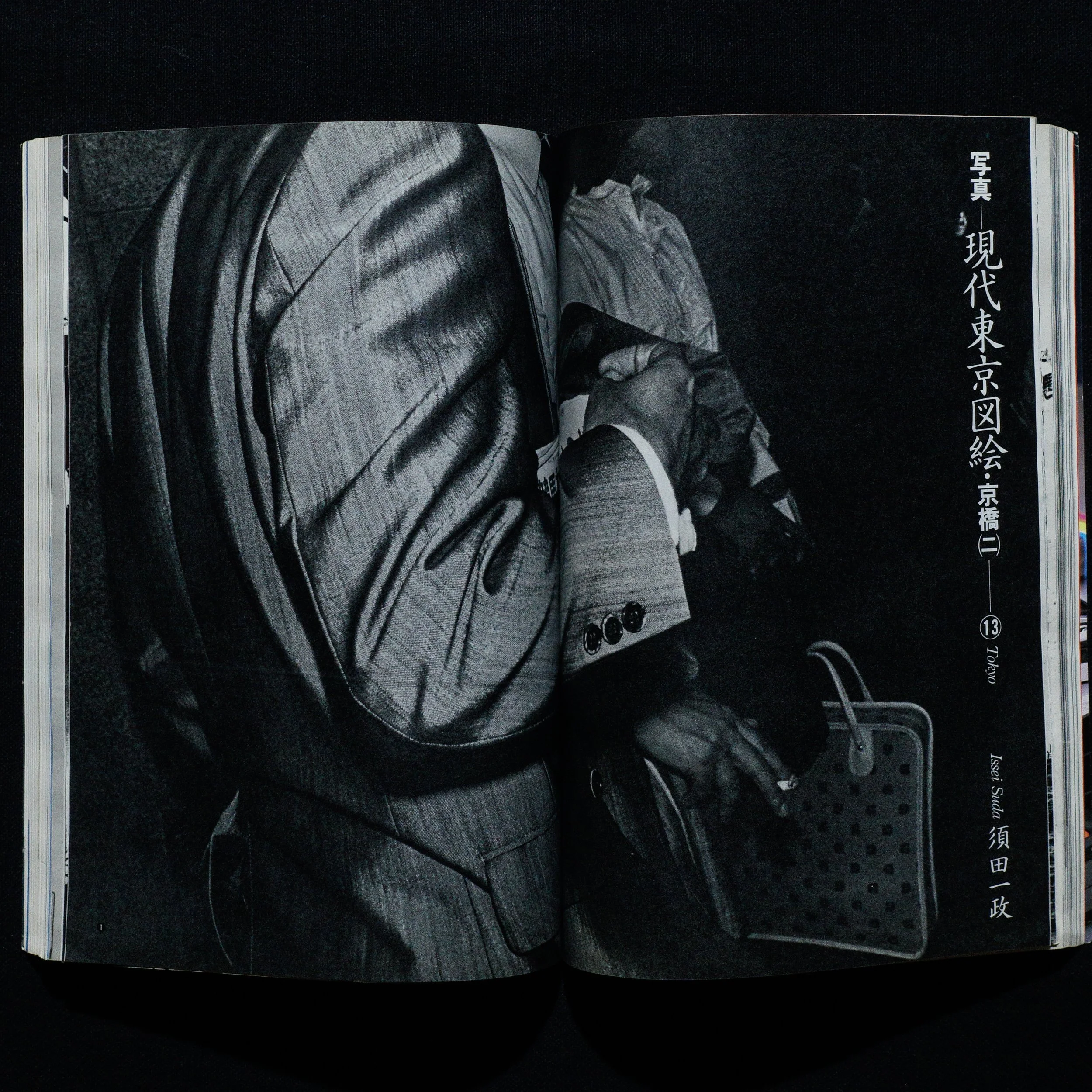
Suda was interested in the moment when an ordinary thing, viewed from a slightly altered angle, suddenly revealed something strange. The city continues with its familiar routines, yet framing, distance, and timing make its surfaces increasingly difficult to read.
Masao Tanaka’s accompanying text gives this uncertainty a concrete form. He works through the photographs one by one, trying to establish where each was taken and following bridges and waterways back into Tokyo’s local history. For one street scene, he admits that he can identify the general area near a bridge, yet cannot tell where the bridge itself lies in relation to the photograph.
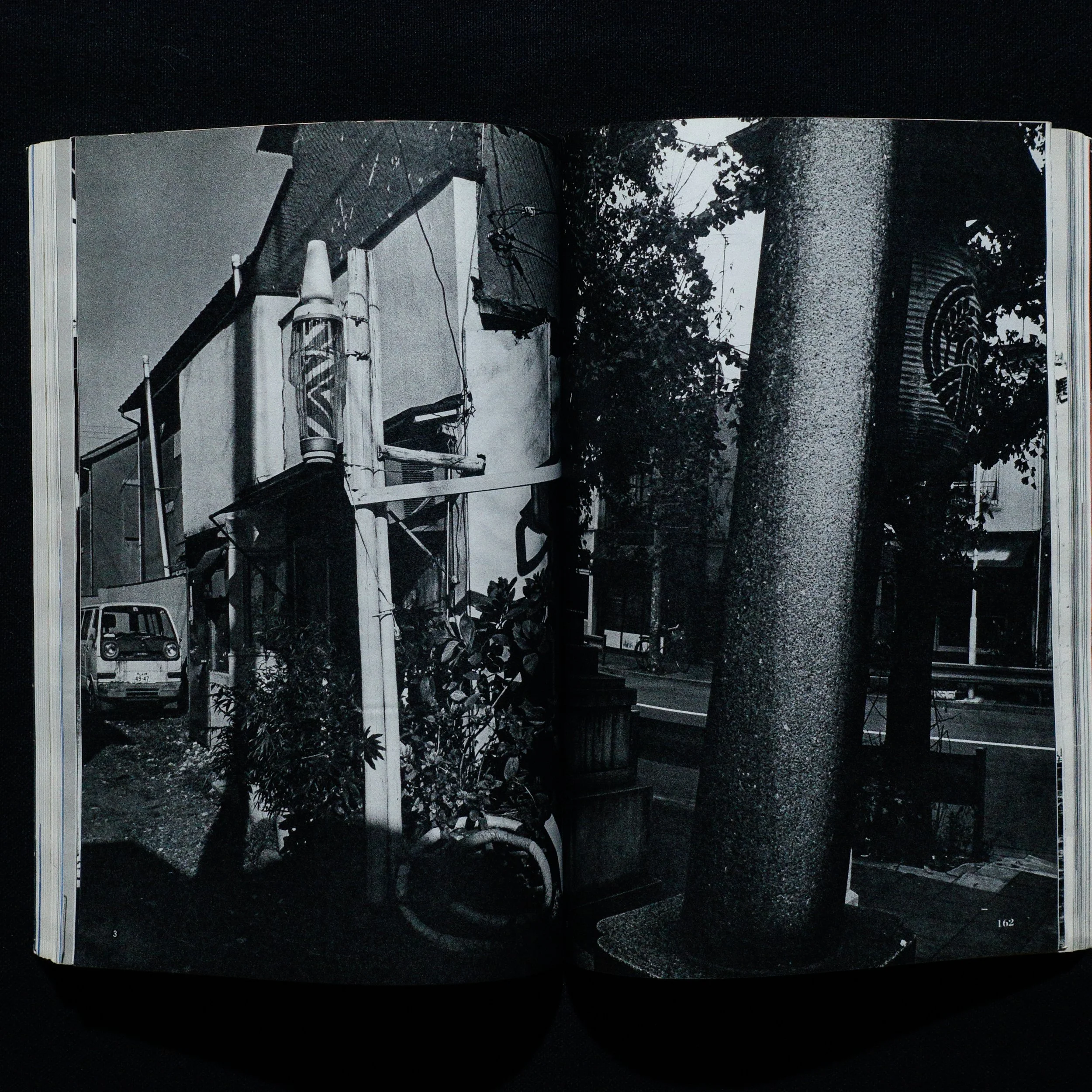
That difficulty of recognition comes very close to Suda’s Tokyo.
Every street has a precise location, yet the photographs weaken the security that location usually provides. Bridges, shrines, shops, and houses become shapes, textures, or patches of shadow. People rarely carry complete narratives either. Someone passes across a bridge, someone sits beside the street, another face disappears behind a body. What remains is the distance produced during a brief encounter between a person and the city.
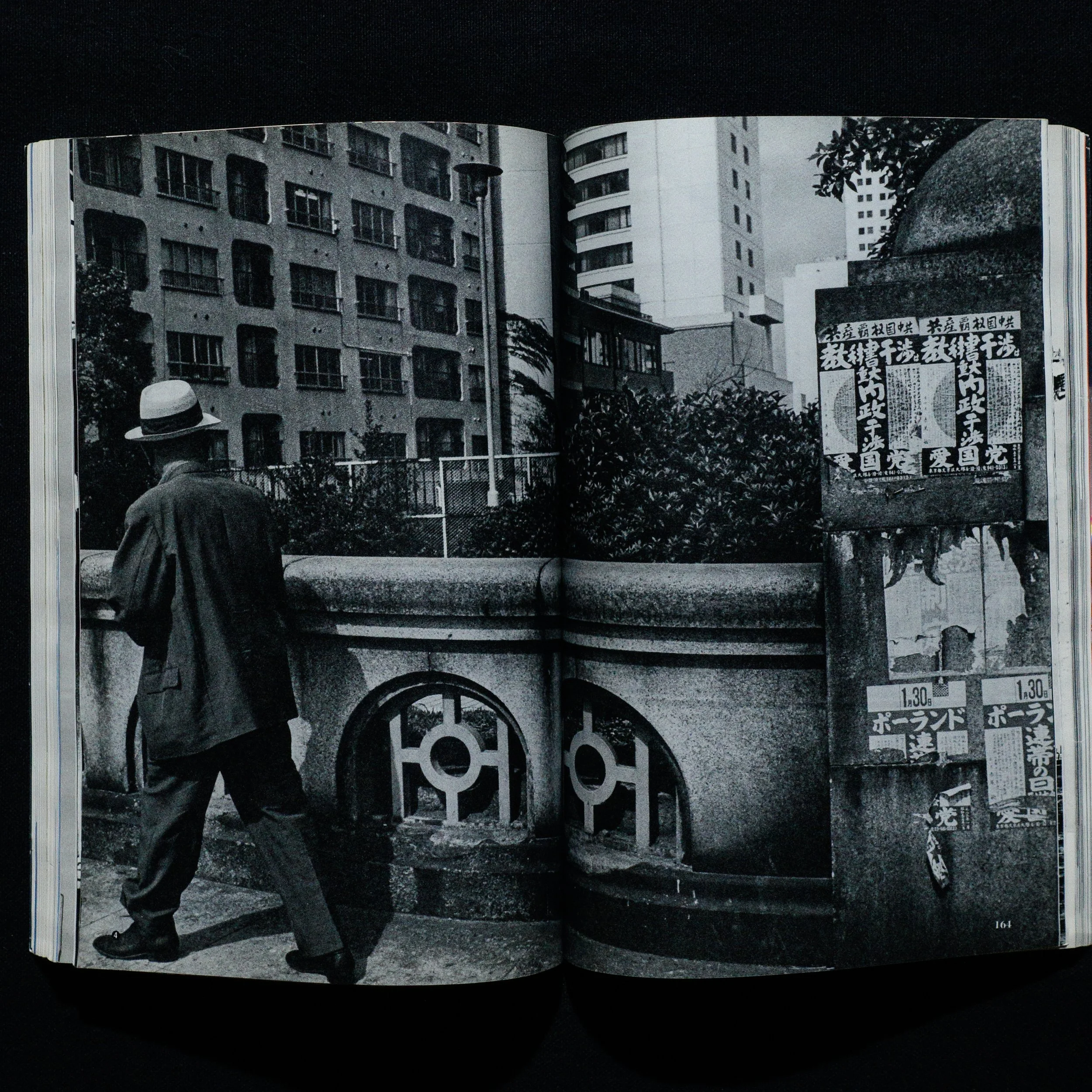
More than forty years later, the exact coordinates matter less than the sensation Suda repeatedly returned to: a place passed every day remains familiar, then suddenly appears as though seen for the first time.
Asahi Camera
“Tokyo Modern Pictorial: Kyobashi (2)”
Issei Suda
The Asahi Shimbun Company, 1983
Text by Masao Tanaka
東京的陌生表面╱須田一政
在《現代東京圖繪》中,須田一政重新回到自己最熟悉的東京。出生於神田的他,長期將東京作為重要的攝影現場。視線經常停在街道上容易被忽略的表面:人的衣服、牆壁、招牌、橋欄、建築邊緣,以及偶然進入視野的身體與手勢。
1983年發表的「京橋(二)」,尤其能看見這種觀看方式。
須田關心的是,日常事物在觀看角度稍微改變之後,突然顯露出陌生感的瞬間。城市依然維持熟悉的生活秩序,取景、距離與瞬間卻讓它的表面逐漸變得難以解讀。
田中雅夫為專題撰寫的文字,讓這種不確定變得更具體。他逐張考證照片的拍攝地點,有時從橋梁與河道一路追溯到東京的地方歷史。遇到其中一幅街景時,他坦言只能判斷照片拍在橋附近,卻無法從畫面確定橋本身究竟位於哪個方向。
這種「認不出來」的狀態,很接近須田所拍攝的東京。
每條街道都有明確的位置,照片卻削弱了位置原本提供的安全感。橋、神社、商店與住宅逐漸成為形狀、材質或一片陰影。人物也很少承擔完整的故事。有人從橋上經過,有人坐在街邊,有人的臉被另一個身體遮住。留下來的,是人與城市短暫相遇時產生的距離。
四十多年後再看,具體座標已經不再是最重要的資訊。真正留下來的,是須田一政反覆觸碰的一種感覺:每天經過的地方依然熟悉,某個瞬間卻突然像第一次看見。
《アサヒカメラ》
「写真・現代東京図絵・京橋(二)」
須田一政╱Issei Suda
朝日新聞社╱1983
文:田中雅夫
