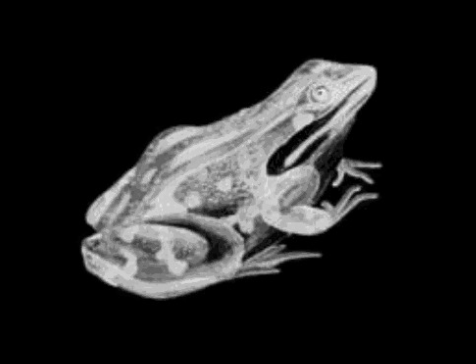

The Tiniest Life
This is not an easy photobook to sit with.
The Tiniest Life turns its gaze toward the inside of the maternal body—and toward one of the most difficult thresholds a society can face: how an unborn life is seen. Published in 1971, the book emerged in postwar Japan at a moment when the Eugenic Protection Law, family planning, abortion, and sex education were still tightly entangled in public discourse. Kazuo Kenmochi chose to work through sequences of embryos and fetuses, bringing the questions of life and death back into direct view.
Kenmochi is often remembered for his long-running documentary engagement with narcotics in Japan. That experience with highly sensitive subjects also shaped his photographic language. In this book, medical material moves beyond documentation: early forms of life appear with a sculptural, almost uncanny presence, intensified by richly printed dark tones and mostly black-and-white imagery. The result feels unsettling and impossible to ignore.
What gives the book its force is its refusal to settle into a single conclusion. It does not sentimentalize the fetus, and it does not flatten the subject into a neat argument. Page by page, it turns a zone usually hidden behind law, medicine, and private experience into a visual field that demands attention. Photography works here as a form of witnessing at the edge of becoming. The smaller the life, the heavier its presence feels.
Some photobooks preserve the surface of an era.
Others make us rethink what it means to look.
The Tiniest Life belongs to the latter.
full version available for members only
